
Feature
Digging into mining: A construction sector going green
As miners pursue lower-carbon operations, the construction phase is changing too. Electrified fleets, brownfield mine redevelopment and automated processing plants are forcing contractors to rethink power infrastructure, underground safety, plant design and project delivery. Liam Critchley reports.
Main image: Rio Tinto’s Oyu Tolgoi copper and gold mine in Mongolia. Credit: Rio Tinto
Powered by

Sustainability in mining is no longer only an operational issue. It is starting to influence how mines are designed, constructed, refurbished and equipped before extraction even begins. Mining still carries visible environmental concerns, of course, but the industry is trying to reduce its impact across the project life cycle. For construction, that means lower-carbon site development, more electric equipment, greater use of existing mine assets and new approaches to building processing infrastructure.
“The whole aspect of mining is being carefully scrutinised by NGOs, governments and corporations themselves, so there’s a push to construct greener and less carbon-intensive mines,” says Alejandro Gonzalez, editor of MINE Magazine and Mining Technology at GlobalData.
The result is a different construction brief. Mine projects increasingly need to account for electric fleets, charging infrastructure, underground communications, safer brownfield redevelopment and more automated processing plants from an earlier stage.
Electrification reaches the construction phase
One of the clearest changes is the move away from diesel-powered vehicles and equipment. This is often discussed as an operational issue, but it also affects how mine sites are constructed and prepared for production.
“The big construction challenges being solved include trying to decarbonise and electrify the process because the traditional digging, extraction and haulage processes are dirty [energy] processes,” says Gonzalez.
Mine construction has traditionally relied on diesel machines for digging, haulage, loading, drilling and site preparation. As battery-electric vehicles and electric mining trucks become more common, projects need to consider how those machines will be powered, charged, maintained and moved around site.
“There are lots of vehicles and machines involved that use diesel, so there’s a push to move away from diesel as a fuel for a start,” says Gonzalez. The machinery is increasingly incorporating battery-electric systems alongside conventional mechanical components. “These are factors that are going into the construction of the mine itself and the way the materials of the mines are removed.”
The construction impact is not simply the arrival of different machines. Electric fleets can change the supporting infrastructure around a mine. Projects may need charging areas, upgraded electrical connections, adapted maintenance facilities and haulage routes designed around different equipment requirements. In underground mines, electric equipment can also influence ventilation planning and working conditions.
Building mines around electric fleets
Several projects show how electrification is beginning to affect mine development.
At First Quantum Minerals’ Kansanshi copper and gold mine in Zambia, Hitachi Construction Machinery trialled an ultra-large full-battery dump truck using First Quantum’s existing trolley-assist infrastructure. The trial, which ran from June 2024 through August 2025, focused on decarbonising haulage.
Then, in April 2026, Hitachi Construction Machinery hosted a technical showcase at the Kansanshi mine where mining customers observed the truck operating and charging under overhead trolley lines following the completion of the trial, which demonstrated zero CO2 emissions during trial operation, improved acceleration and reduced noise levels, while the deployment of the first electric Hitachi ultra-large excavator in south-east Europe, also announced in April, marked another step in reducing local exhaust emissions and diesel dependence at the Pljevlja coal mine in Montenegro.
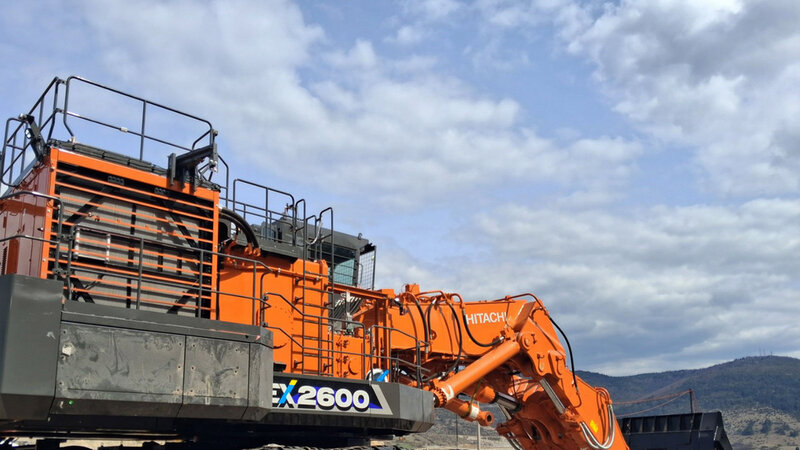
The Hitachi EX2600, a 250t mining excavator. Credit: Hitachi Construction Machinery
“The real-world operating data obtained from this technological feasibility trial demonstrates the Full Battery Dump Truck's capability for continuous operation in actual mine sites, enabling us to propose optimal operational plans and trolley line designs,” said Hiroshi Kanezawa, Hitachi Construction Machinery’s VP of the mining business unit.
The important point is not only the truck itself. Battery-electric and trolley-assist haulage can require power distribution, charging or overhead electrical infrastructure, maintenance facilities and route planning. These are construction and engineering decisions as much as fleet-procurement decisions.
In Western Australia, Fortescue’s partnership with Liebherr highlighted the scale at which
mine equipment was changing. The companies announced plans in 2024 for 475 zero-emission machines, including autonomous battery-electric haul trucks, electric excavators and
battery-powered dozers. As of May 2026, the partnership had moved into field validation
and operational deployment.
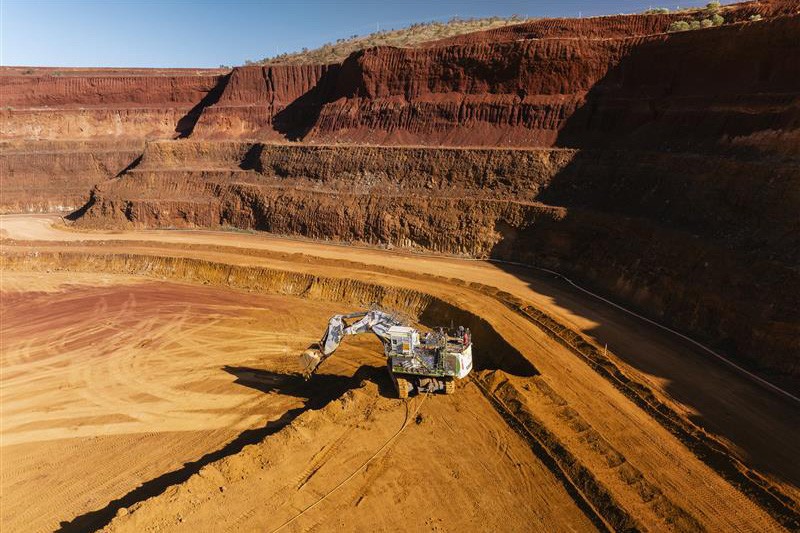
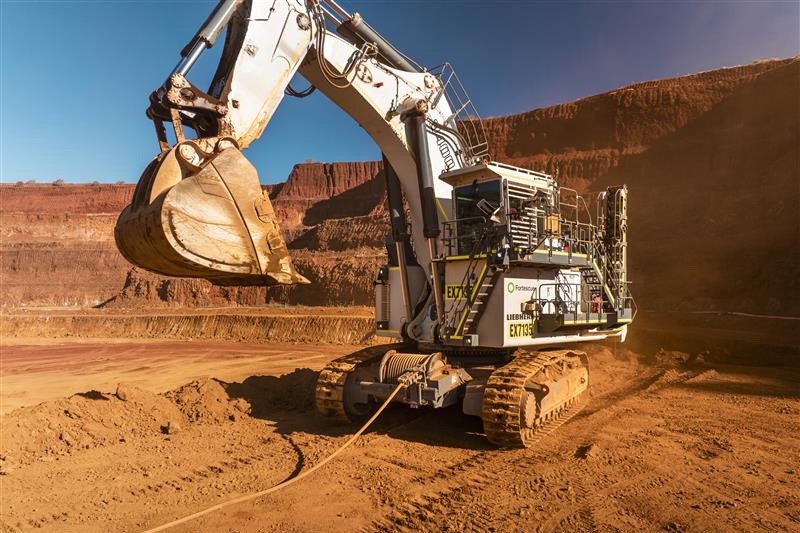
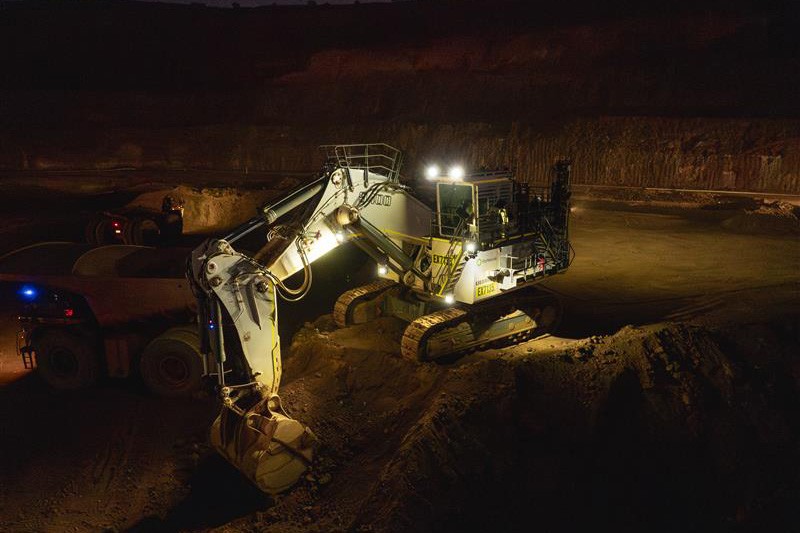
Fortescue and Liebherr have a green mining partnership to decarbonise heavy industry by developing and deploying a massive fleet of zero-emission, autonomous mining equipment. Credit: Liebherr

“We wrote a new page of Liebherr history and are proud to be able to make an important contribution to the decarbonisation and autonomisation of heavy-duty machines,” said Jörg Lukowski, Liebherr-Mining’s chief commercial officer.
That scale has implications for mine-site delivery. A project that uses electric trucks, excavators and dozers needs power systems, workshops, haul routes and maintenance strategies designed around those machines from the start.
The Matawinie Graphite Mine in Canada, owned by Nouveau Monde Graphite, is another example of how electrification is influencing mine development. The project is intended to operate as an all-electric open-pit mine, with Caterpillar involved in the transition to a zero-exhaust-emission fleet. In March 2026, Nouveau Monde said preparatory works had been completed, detailed engineering had significantly advanced and key contracts covering more than 50% of projected capital expenditure had been awarded as the project moved towards a final investment decision in the first half of 2026.
Underground projects add another layer of complexity
Electrification is also moving underground. That brings different construction challenges
because underground mine development takes place in constrained, hazardous and constantly changing environments.
In South Africa, Ivanhoe Mines’ Platreef project has used battery-electric underground equipment, including 14 tonne (t) loaders and 42t dump trucks. The project has also linked its use of solar-generated power to mine development, construction activities and charging for its battery-powered underground fleet.
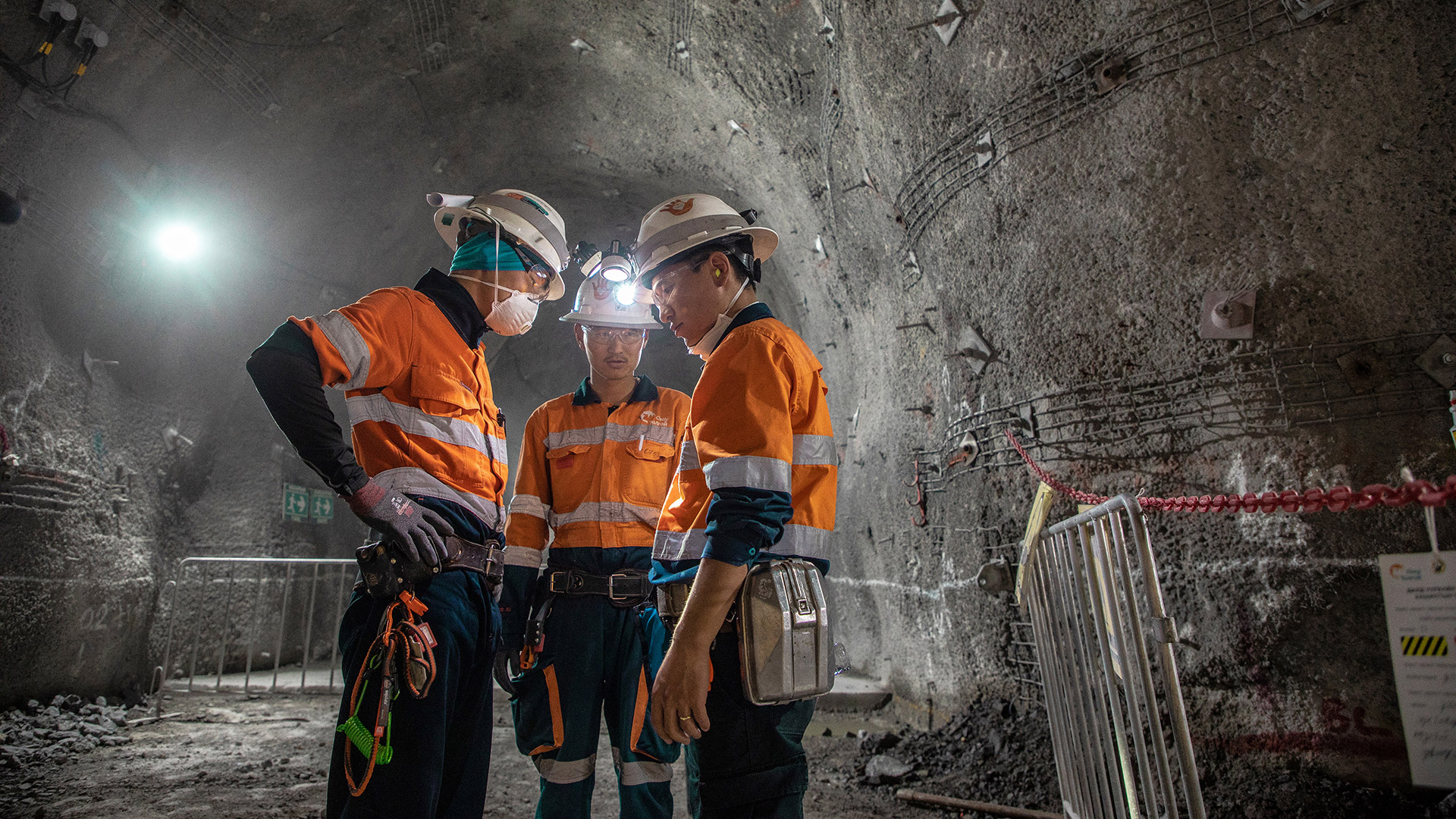
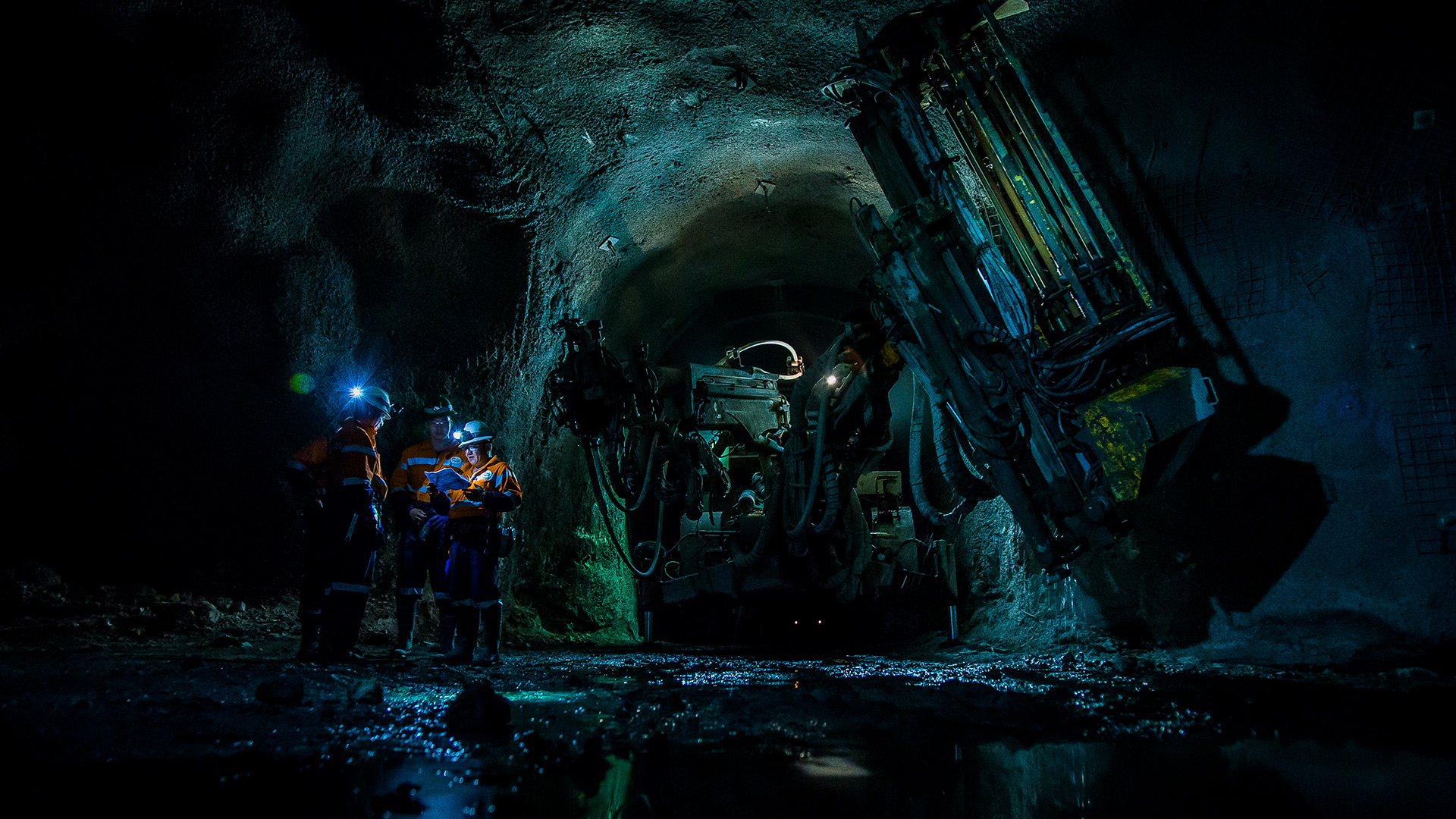
Oyu Tolgoi, underground, Mongolia. Credit: Rio Tinto
Underground electrification is also gathering pace across new mine developments. Projects including Torex Gold’s Media Luna mine in Mexico, Foran Mining’s McIlvenna Bay project in Canada and Glencore’s Onaping Depth project in Ontario are integrating battery-electric fleets into underground operations, increasing the need for charging infrastructure, electrical distribution and coordinated mine planning during construction.
Underground construction may have excavation as the priority, but the integration of equipment, power and digital systems is increasingly important.
Reopening old mines creates a construction opportunity
Another important sustainability trend is the pressure to reopen and redevelop existing mines rather than construct entirely new ones.
“There’s a lot of pressure from miners to not start new mines but revisit old mines and see if they can get more from [it],” says Gonzalez. “The positive side is that it’s [more] environmentally friendly, but the problem is that as you go further down the mine, the mines get older.” Ore grades may decline in some mature deposits, meaning more material may need to be processed for the same output.
For the construction element, brownfield mining can be highly complex. Reopening an old mine may involve stabilising underground workings, upgrading access routes, improving ventilation, installing modern power and communications systems, dealing with water ingress and bringing old infrastructure up to current safety expectations.
“The technology to re-open old underground mines has improved so miners are now going further and further underground,” says Gonzalez. “However, vehicles have to work with a lot of different substances, pressures and gases.”
This makes mine reopening a construction-led sustainability issue. The environmental case may be based on reuse, but delivery depends on whether old underground assets can be made safe, productive and suitable for modern equipment.
The deeper and more complex underground mines become, the more important safety and communication technologies are to construction and redevelopment work.
As these mine developments push further into deeper and more complex environments, safety
and communication systems are becoming a bigger part of construction and redevelopment planning as well.
At Rio Tinto’s Oyu Tolgoi copper and gold mine in Mongolia, V2X proximity-awareness systems have been trialled underground to improve safety in confined areas where visibility is limited. The systems help contractors and operators manage vehicle movements and personnel tracking in complex underground environments where conventional line-of-sight detection can be unreliable.
“Companies are trialling a new way of allowing the miners to communicate underground, because you can’t use GPS to track vehicles, equipment and personnel in real time as you don’t have the connectivity underground [the signals don’t penetrate the rock layers] compared to surface mines,” says Gonzalez, although some mines deploy private LTE or 5G systems to enable tracking and communication.
Processing plants are also being rebuilt
The construction challenge does not stop at the mine entrance. Once minerals and ore are removed, they pass through processing, refining and smelting facilities. These plants are also being affected by the push for greater sustainability.
“Another aspect to consider is that once the minerals and ore have been removed from the mine, they go through a processing stage and there’s a huge construction aspect to all of that,” says Gonzalez. “The processing has traditionally been a dirty business, and companies are looking to clean up their act as well.”
Robotic systems are increasingly being deployed to automate parts of that refining process. AlumatIQ, for example, has developed a robotic automation system for the anode-change process in aluminium refining. The aim is to improve safety, efficiency and environmental performance.
The relevance for construction lies in how such systems are installed. AlumatIQ says its robotic systems are customised to the specifications of each smelting plant and can be installed on existing cranes or delivered with new cranes.
That makes automation a plant-construction and retrofit issue as well as a processing issue. Robotic systems may require crane integration, changes to plant layout, electrical and control systems, safety zones, access planning and commissioning. Where they are installed in existing facilities, contractors may also have to work around live operations and legacy equipment.
“Robotics as part of construction make-up is a big deal,” concludes Gonzalez. “That’s going to change how all these companies build their processes, it’s going to involve different kinds of fuels and robots instead of intensive labour.”
That’s all part of the great rethink of the construction aspect to mining.

