

Megaproject update
HS2
Location: UK
Type: High-speed rail
Estimated cost: £87.7–102.7bn
Main image: Chiltern tunnel north porous portal (complete). Credit: HS2 Ltd
Powered by

The global construction outlook is edging back into positive territory. On paper, that looks like a recovery. In practice, it is something more awkward: a return to growth in an industry that has lost the comfort of stable assumptions.
Worldwide construction output is forecast to grow by 1.5% in 2026 after a 0.2% decline in 2025, according to GlobalData’s Global Construction Outlook: Key Trends and Opportunities to 2030 (Q1 2026). Those figures matter, but they are not the whole story. The more useful signal is what sits beneath them: geopolitical disruption, elevated input costs, strained labour markets, tighter finance and a growing question over which projects can be delivered profitably.
Demand has not disappeared. Governments still need transport networks, grids and utilities. Corporates still want logistics capacity, semiconductor plants and data centres. What has changed is the threshold for turning that demand into viable work. The industry is now deliverability constrained.
That is why the global construction disruption outlook is a test of commercial discipline.
Is this thing on?
HS2 has become something the construction industry recognises instinctively – a live demonstration of how delivery risk builds when scope, sequencing and governance drift out of alignment.

78%
527 of 676 major structures are complete
or under way

85%
4 out of 5 twin-bore tunnel excavations
are complete

4%
2 out of 52 viaducts are complete

11%
19 out of 169 bridges are complete

71%
108 million cubic metres of earth moved to date
Source: HS2 Ltd, as of May 2026
The original case was presented as straightforward. In January 2012, ministers approved a Y-shaped HS2 network from London to Birmingham, continuing to Manchester and Leeds. Construction costs were estimated at £32.7bn in 2011 prices, plus around £8.2bn for rolling stock. Services were expected by 2026 and full operation by 2033. Within a year, the budget had risen to about £50bn. By 2015, official estimates had climbed further. By 2020, official estimates for the full network were significantly higher, with ranges varying by phase and review.
Today, HS2 is focused on the London–West Midlands core. The eastern leg to Leeds was cancelled in 2021. The Manchester extension followed in 2023. Euston remains subject to redesign and affordability constraints. The
2033 target has effectively fallen away, with no
confirmed replacement.
Every change to scope reshaped the programme underneath. Interfaces move. Procurement strategies shift. Risk widens.
You can see it in the phasing. Early works and major civil contracts were let before designs were fully stabilised. In practice, that creates a moving target. Once construction starts against an evolving design, rework becomes more likely. Costs rise and commercial pressure follows. Confidence erodes, often quietly, across the supply chain.
Infrastructure at this scale only delivers full value when the system works as intended. Remove Leeds, remove Manchester, and redesign the London terminus, and the business case changes fundamentally.
This is where HS2 shifts from an engineering challenge to a delivery one.
By early 2025, scrutiny had sharpened. The Public Accounts Committee described HS2 as “a casebook example of how not to run a major project”. It also pointed to a persistent gap between Department for Transport and HS2 Ltd estimates for Phase 1, with figures ranging from £45bn to £66bn in 2019 prices. Adjusted for inflation, some expectations now sit close to £80bn.
That gap is more than accounting. It signals uncertainty in the baseline itself. Without a stable baseline, contractors find it harder to price risk, suppliers hesitate to invest and government finds it harder to maintain credibility.
The programme is now in reset to put it “on a more stable path”. Around 30,000 people are working across the route. Tunnelling and major structures continue at scale. A new leadership team is pushing for tighter control and a more credible delivery plan.
HS2 Ltd’s own project update said, “Our assessment showed civil engineering was out of sequence and behind schedule.”
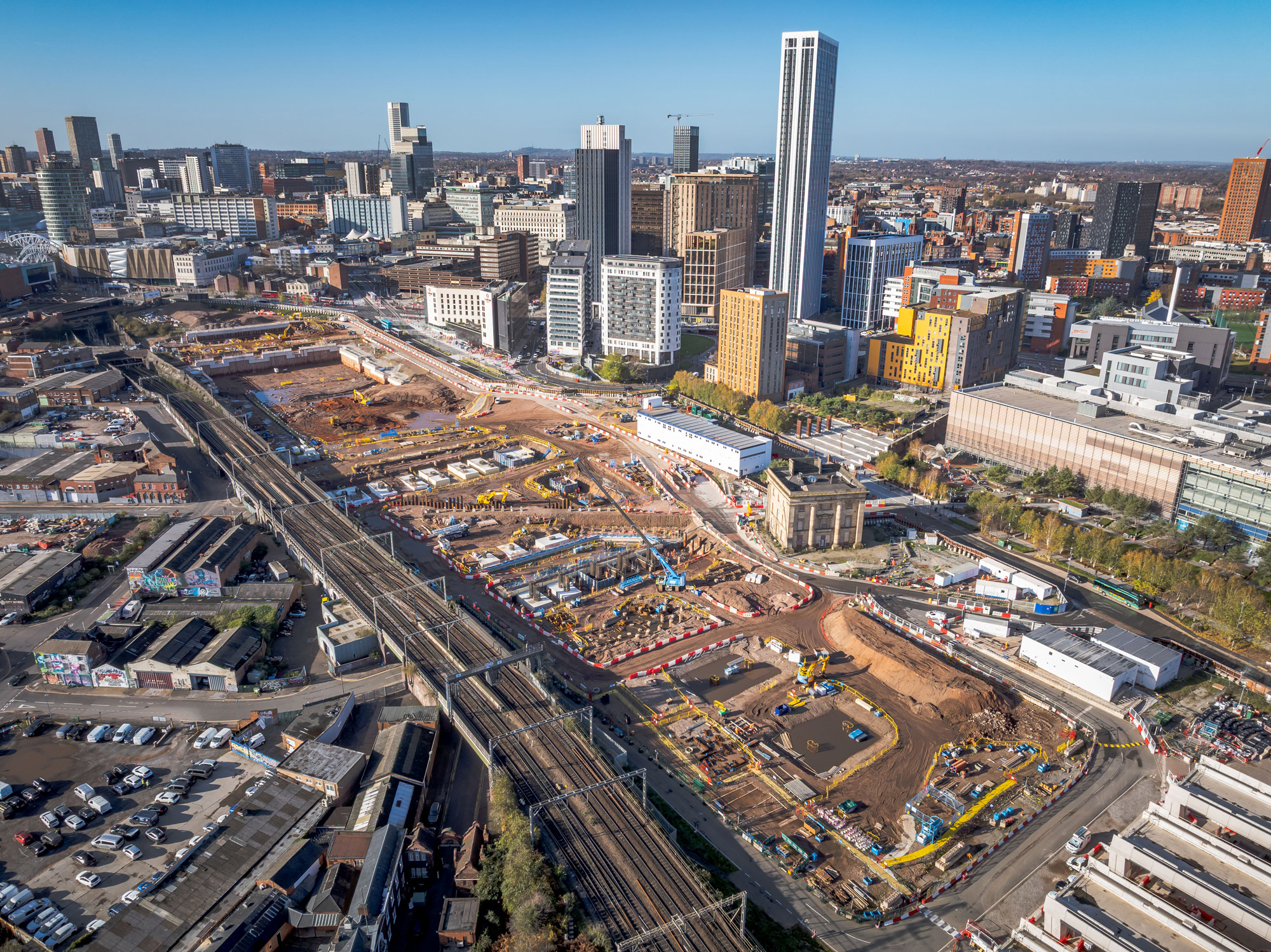
Aerial view of the Curzon Street site with the old station building in the centre.
Credit: HS2 Ltd
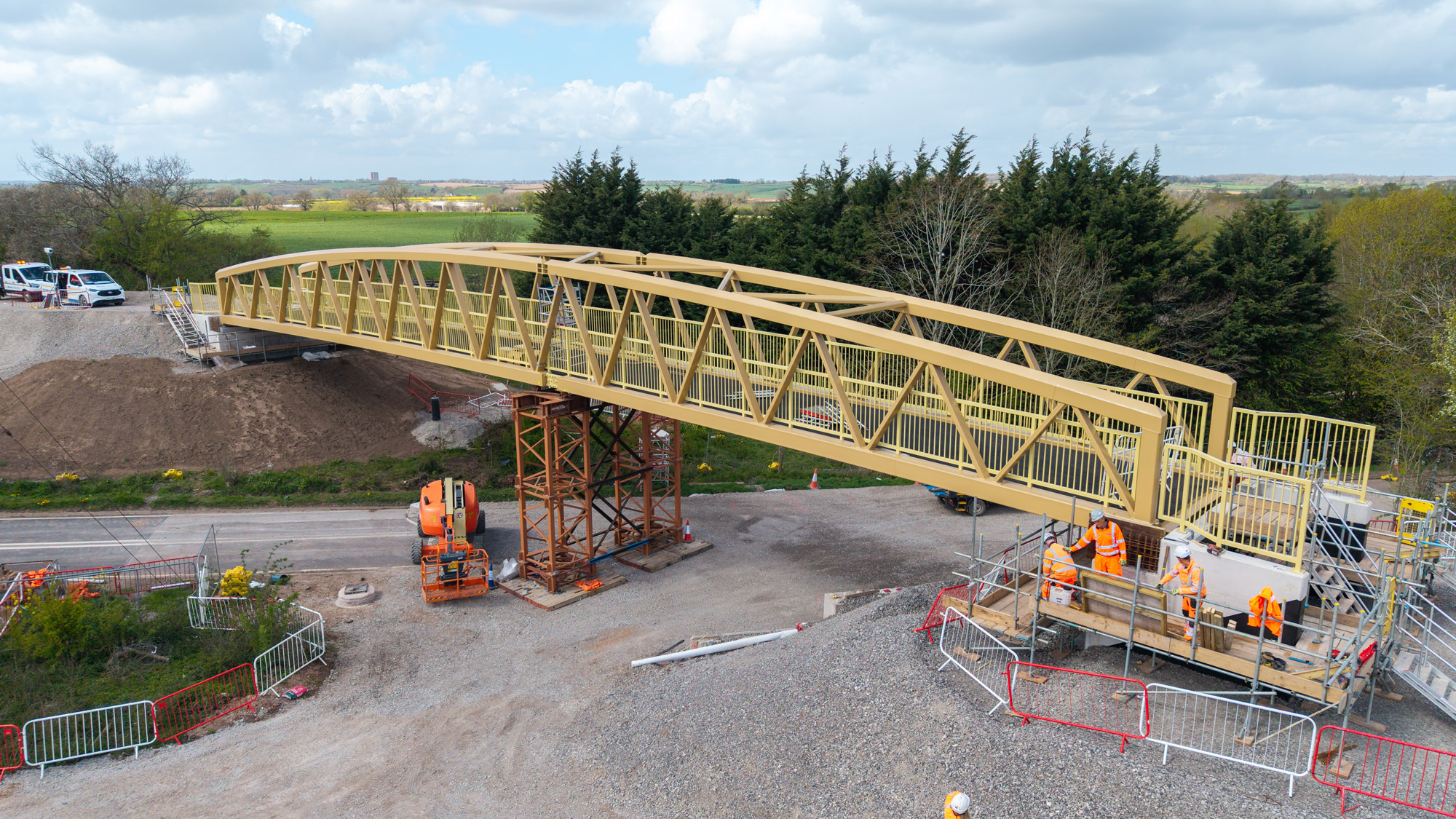
Offchurch Cycle Bridge. Credit: BBV
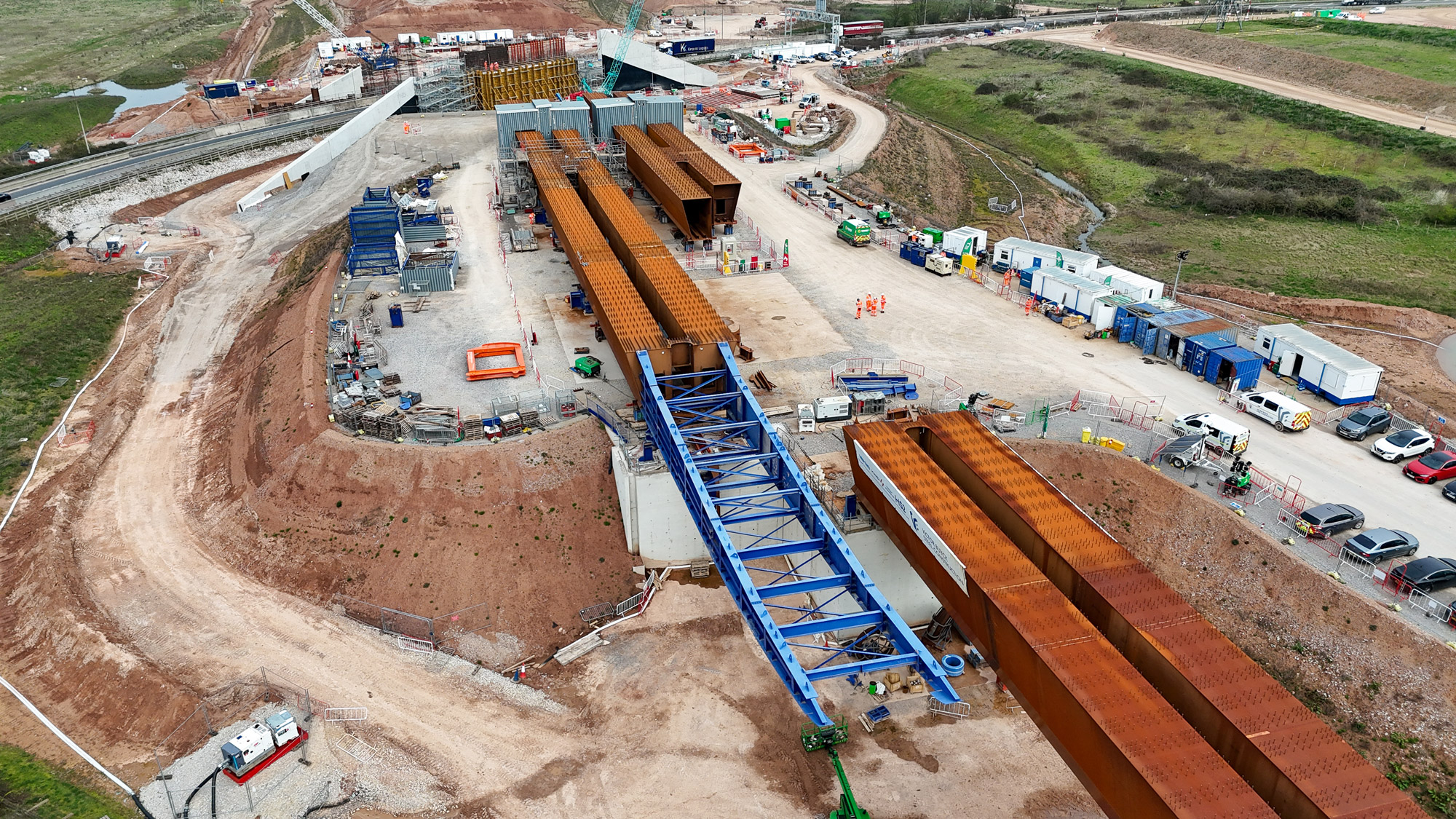
M6 South Viaduct West Deck Pre Launch. Credit: BBV
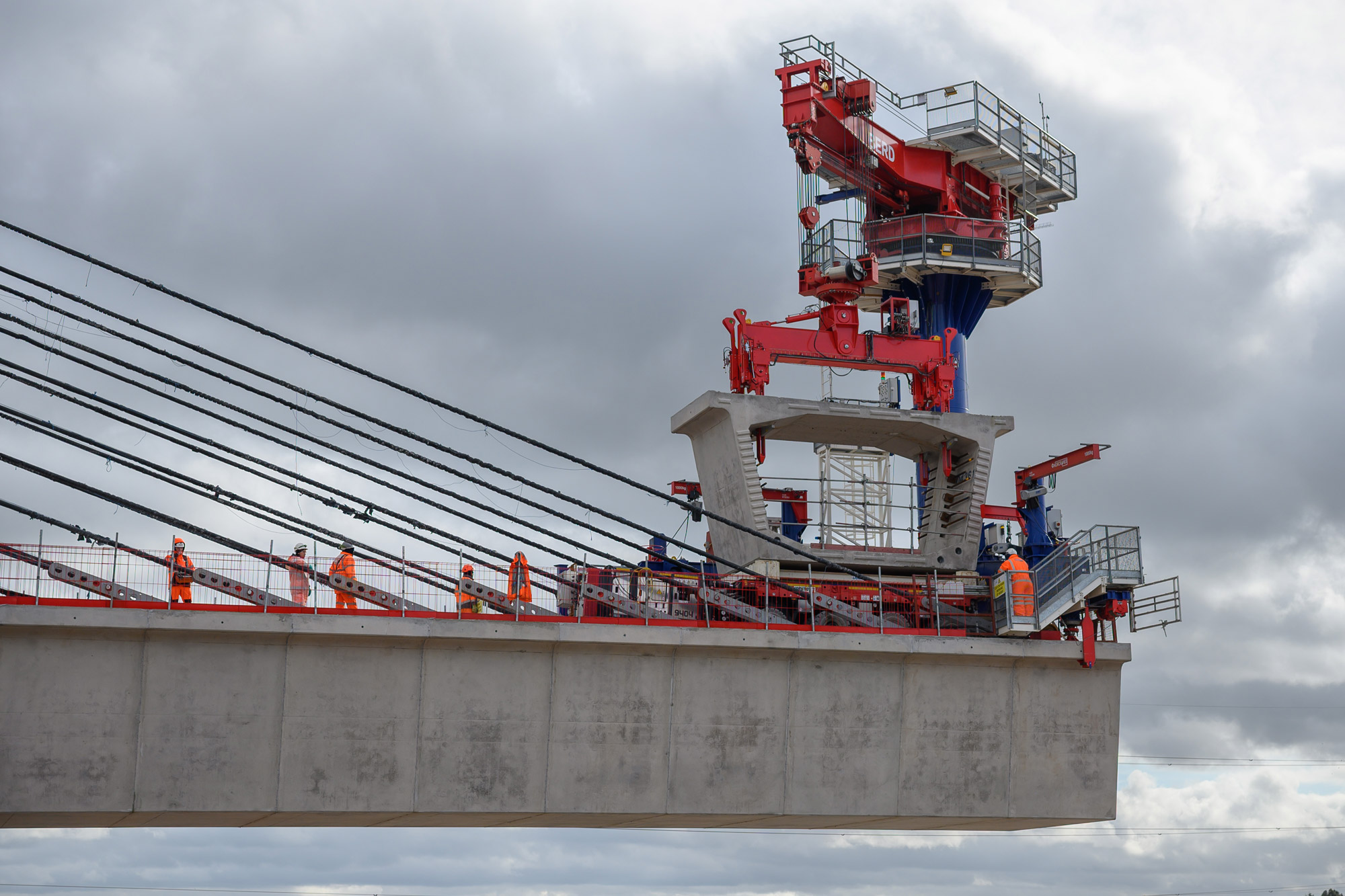
A viaduct segment ready to be lifted into poistion on the Water Orton viaducts Feb 2026. Credit:
Sunbelt Rentals. Credit: BESS

A reset at this stage does not restore the original scheme. It defines a new one, shaped by what has already been committed, spent and, in some cases, abandoned.
So where are we now? In May, the UK government’s latest HS2 review put the project’s estimated cost at £87.7bn to £102.7bn, with first services between Old Oak Common and Birmingham Curzon Street now expected between 2036 and 2039. Completion of the railway from London Euston to the West Coast Main Line in Staffordshire is scheduled for 2040 to 2043.
Transport Secretary Heidi Alexander said only a third of the increase was due to inflation, citing omitted scope, underestimates and inefficient delivery as larger factors.
The government plans to reduce operating speeds from about 225mph to nearly 200mph to save around £2.5bn, and has ruled out cancellation, arguing it could cost almost as much as finishing the line.

