

Feature
Building capacity
To tackle persistent labour shortages, construction companies are increasingly turning to automation, AI and robotics to boost productivity and make better use of skilled workers. Chris Lewis investigates.
Main video credit: metamorworks/Shutterstock.com
Powered by

Labour scarcity remains a significant challenge in the construction industry. In the UK, a large proportion of the construction workforce is over 45, with industry reports highlighting an ageing workforce and significant upcoming retirements, while demand for construction work still remains high.
According to the Construction Industry Training Board (CITB), the UK construction industry needs an average of around 41,000 to 53,000 extra workers per year over the 2026–30 period.
This challenge is a global issue, affecting countries including the US, where Associated Builders and Contractors reports that the country will need approximately 349,000 new construction workers in 2026 to meet demand.
These labour shortages are driving greater use of automation in the construction industry, alongside other benchmarks such as electrification and net-zero initiatives. This has led to increased integration of AI, industrialised construction and robotics.
Construction companies such as BAM UK & Ireland and Costain are adopting automation, industrialised construction and robotics to address this labour scarcity. Both report operational benefits and expect continued gains, though the scale of industry-wide impact still remains to be demonstrated.
The capabilities of automation
Automation offers significant potential. For example, Costain and VVB Engineering have developed ATRIS, a robotic and AI solution that automates tunnel services installation. This technology is expected to deliver cost, productivity and safety benefits, primarily by reducing risks associated with manual tunnelling, such as hand-arm vibration and working at height in confined spaces.
“It is improving safety for repetitive tasks too,” says Rob Cairns, head of innovation at Costain. “And it’s freeing up opportunities for people to take on more skilled and complex roles.”

Controlling Spot, Boston Dynamics’ quadruped robot. Credit: BAM UK & Ireland
As a result, employees can focus on roles requiring advanced skills and experience, where shortages are more acute. This approach helps mitigate the impact of labour shortages on project delivery.
BAM UK & Ireland has also implemented automation to achieve two main objectives: to assist employees with hazardous, physically demanding and repetitive tasks, and to allow them to save time and focus on higher-value responsibilities.
For example, the company deployed Spot, Boston Dynamics’ quadruped robot equipped with a Trimble X7 laser scanner, at a remote Shetland site. Using a private 5G network, Spot surveyed 55,176m² of challenging terrain.
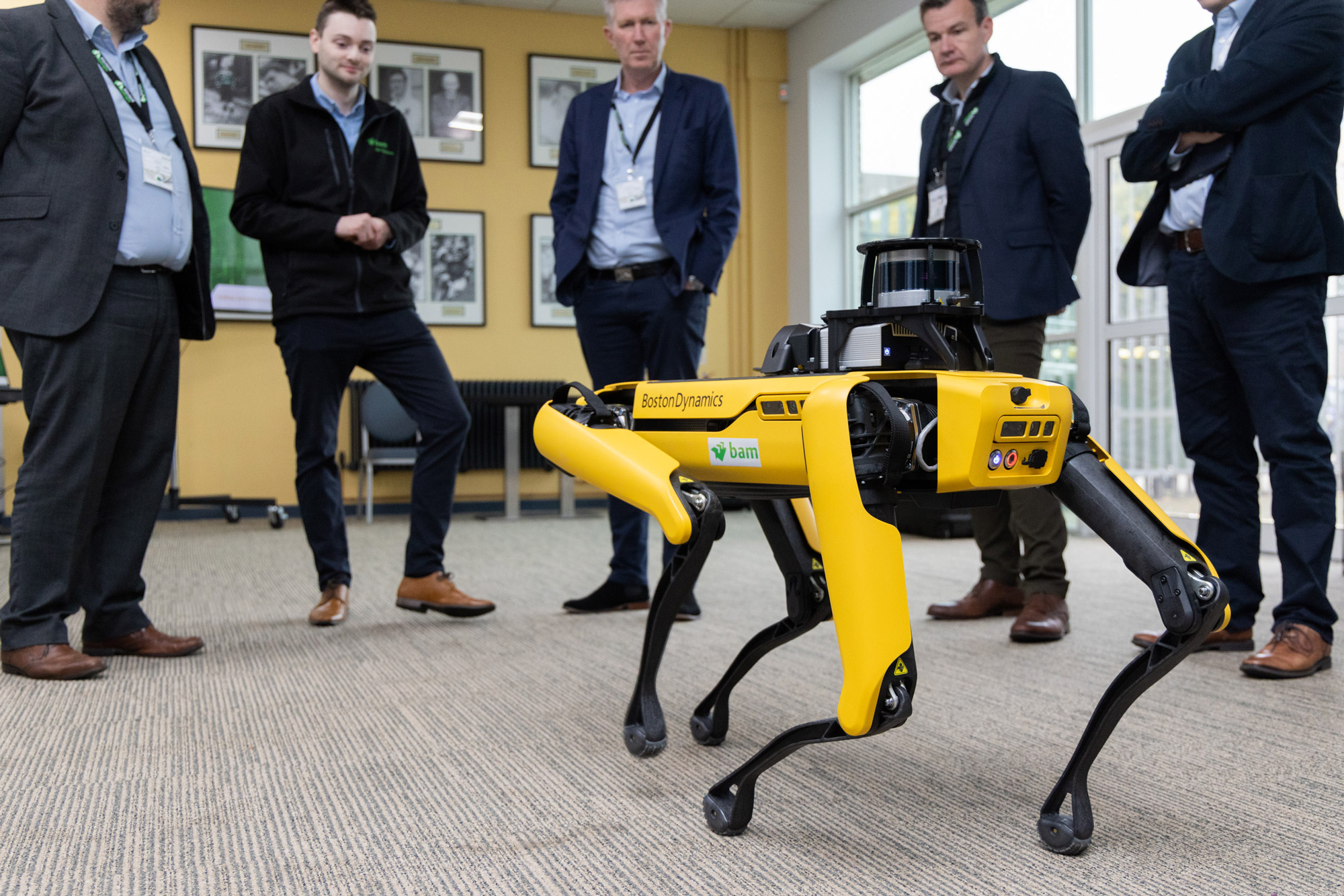
A closer look at Spot. Credit: BAM UK & Ireland
“This was especially useful in conditions where people would not want to be repeatedly sent out due to the weather and terrain,” says Alex Richards, director of IT and digital project solutions for BAM UK & Ireland. “The purpose was to let the machine handle hazardous and hard-to-resource work, while freeing skilled people to focus on work requiring judgement.”
Additionally, BAM UK & Ireland has tested an AI tool that turns photographic site walks into a digital comparison against the project plan, according to Richards. The tool maps site images to project plans and flags where reality and programme have diverged, enabling teams to compare recent images with previous ones.
“These automations reduce the need to chase subjective updates across sites and allow project managers to spend more time on decisions, rather than data collection,” Richards emphasises.
The significance of AI and robotics
According to Richards, AI and robotics enable skilled workers to focus on higher-value tasks and can increase productivity when well implemented. AI is particularly beneficial for project management and progress monitoring.
BAM UK & Ireland’s AI tool analyses photographic site walks, allowing employees to compare progress against project plans. This process quickly identifies deviations, providing teams with timely, objective insights.
Robotics, such as the laser-scanning robotic dog, are designed to handle dangerous and physically demanding tasks, reducing the need for human involvement in these activities.
“The robotic dog, for example, shows how machines can survey and scan challenging environments more safely and efficiently than repeatedly deploying people into them,” Richards stressed.
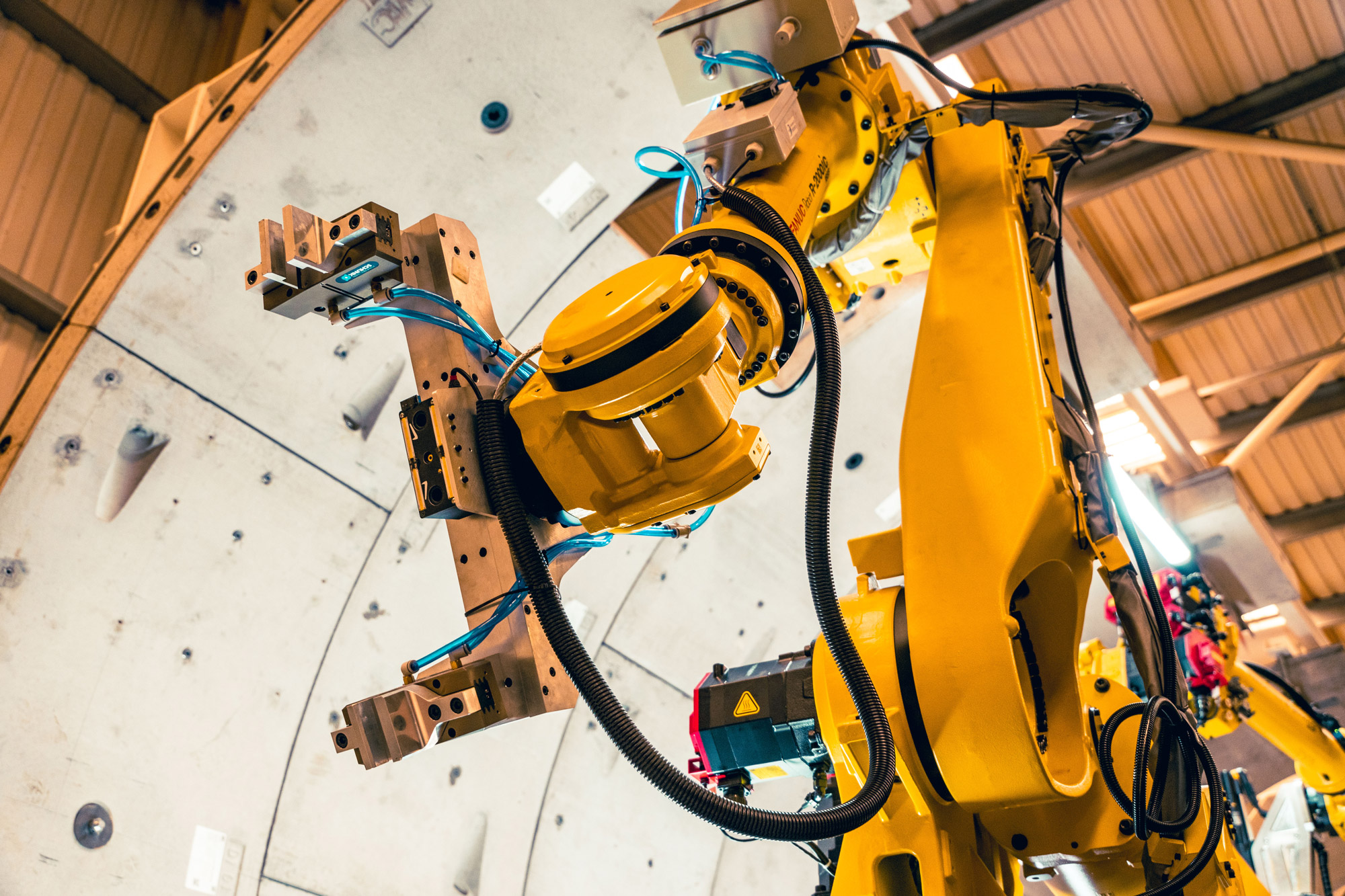
ATRIS, a robotic and AI solution. Credit: Andrei Zota/Costain
Cairns adds that AI-powered planning and digital scheduling tools are gaining traction, particularly in the roads sector, where they are often used at the start of projects. Technology that assists with compliance and document management is also growing in use, as these tasks are time-intensive and divert skilled staff from other work.
“It’s integral to projects being delivered to the highest quality and safety standards, but it is currently a time-intensive process and not the best use of finite resources and skills,” Cairns says.
Industrialised construction is also addressing labour scarcity. Costain, with civils partner A E Yates, has engaged Hyperion Robotics, a Finland-based automation company, to 3D-print concrete pipe support bases (sleepers) for a carbon capture project in Teesside in the UK.
"Experienced staff can now spend time on decision making, rather than data gathering.”
Alex Richards, director of IT and digital project solutions, BAM UK & Ireland
“We’re looking to deliver low-carbon concrete sleepers for a carbon capture project in Teesside, where Hyperion’s advanced technology is improving safety by eliminating the need for manual formwork, while enabling precise, repeatable and efficient production,” Cairns says.
These automation technologies are delivering productivity benefits in pilot use, particularly with BAM UK & Ireland’s AI tool, which enables users to identify discrepancies between plans and site conditions and reduces reliance on subjective updates.
“Experienced staff can now spend time on decision making, rather than data gathering,” Richards notes.
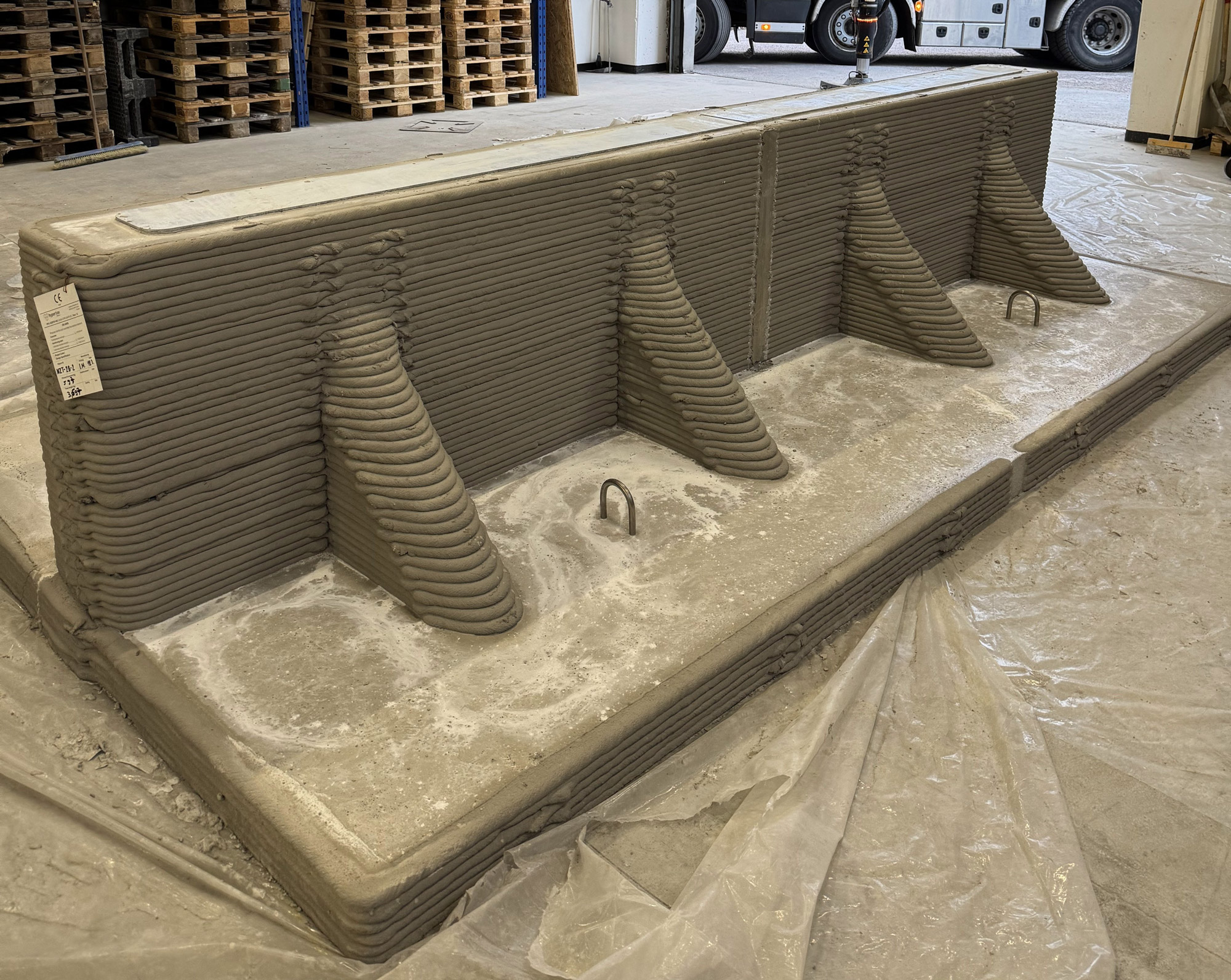
Low-carbon 3D-printed concrete sleepers. Credit: Hyperion Robotics
Similarly, the robotic dog enables efficient surveying of over 55,000m² of terrain. However, Richards has noted that productivity gains depend not only on automation but also on investment, effective technology adoption and staff upskilling.
“So, the measurable gain is not just from having technology, but from implementing it in a way that actually improves delivery,” Richards explains.
Meeting ever-growing demands
Construction companies should recognise that technology alone will not resolve long-term challenges. Cairns has emphasised that data, people and processes must develop at similar rates as automation for meaningful progress. Future professionals must be equipped to use emerging technologies effectively for meaningful progress.
“You can’t throw technology at anything and expect results without addressing the root causes,” Cairns adds.
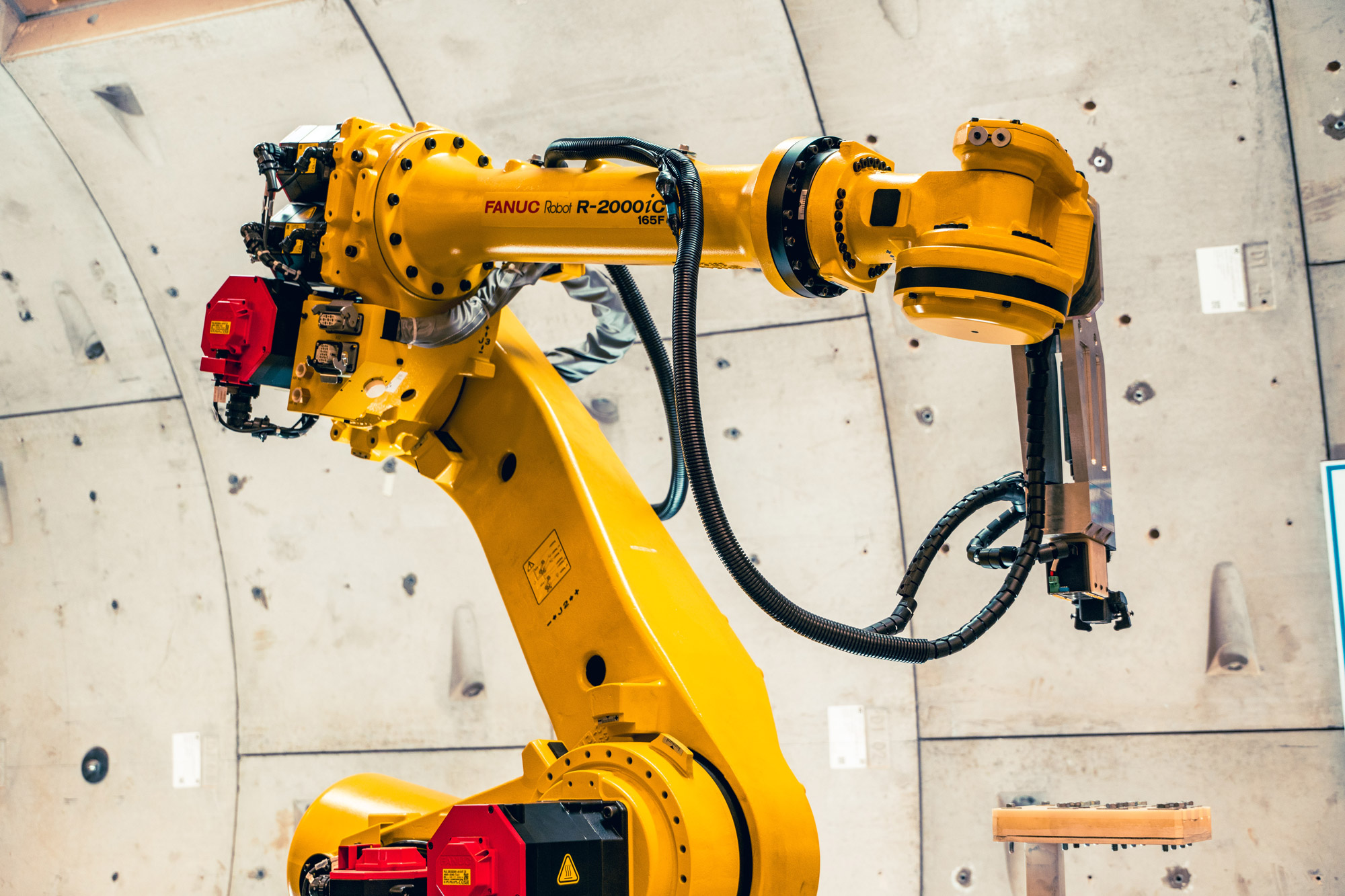
ATRIS automates tunnel services installation. Credit: Andrei Zota/Costain
Richards believes technology is a critical lever for helping the industry meet growing demand when the workforce is shrinking and ageing. As fewer people enter the industry and more retire, automation enables experienced employees to make faster, more informed decisions.
Automation is also shifting hazardous and repetitive tasks from employees to machines. This allows construction companies to use their skilled resources more efficiently.
“The core case is simple,” Richards said. “If the construction industry can’t solve the labour challenge through recruitment alone, it must raise productivity through technology.”
“You can’t throw technology at anything and expect results without addressing the root causes.”
Rob Cairns, head of innovation, Costain
Cairns notes that the construction industry will not change overnight, as infrastructure delivery is “hugely complex”. As a result, automation will be adopted gradually and incrementally.
“Tunnelling, pipelines and cabling are good examples of where repeatable techniques through robotics and automation will work very well though,” Cairns said.
Reflecting on recent trends, Richards believes that automation is becoming increasingly important as labour scarcity continues to reshape the construction industry. He advocates timely technology adoption.
“You can argue about the pace of automation,” he concluded. “But you can’t argue about the direction.”

